flight tracking
Aviation Tracking: How Pilots Stay Current and Compliant
8 Jul 2026 · 11 min read

Aviation tracking has evolved from basic radar plots to sophisticated global networks that monitor thousands of aircraft simultaneously. For pilots, tracking extends beyond knowing where an aircraft is at any moment. It encompasses logging flight time accurately, maintaining currency for different privileges, and ensuring regulatory compliance across licences and medicals. Understanding how these systems work and integrate with professional record-keeping makes the difference between staying ahead of requirements and scrambling to piece together data when it matters most.
The Technology Behind Real-Time Aircraft Monitoring
Modern aviation tracking relies on multiple data sources working in concert. ADS-B (Automatic Dependent Surveillance-Broadcast) forms the backbone of contemporary tracking, with aircraft broadcasting position, altitude, and velocity every second. Ground stations and satellites receive these signals, creating a comprehensive picture of air traffic globally.
FlightAware's network demonstrates this integration, pulling from ADS-B receivers, radar feeds, air traffic control systems, and airline data. The redundancy matters. When one source experiences gaps, others fill the void.
How Global Networks Compile Flight Data
Aviation tracking networks process millions of position reports daily. Each aircraft transmits its unique identifier, allowing systems to build continuous flight paths across continents. Satellites extend coverage to oceanic and remote regions where ground-based receivers cannot reach.
The technology stack includes:
- ADS-B receivers: Ground stations capturing broadcasts up to 250 nautical miles away
- Satellite ADS-B: Space-based receivers covering oceanic and polar routes
- Radar data: Traditional primary and secondary surveillance radar feeds
- MLAT (Multilateration): Calculating positions from signal timing differences
- Airlines and airports: Direct flight plan and gate information

Companies like Cirium aggregate this data to provide analytics on flight status, delays, and operational patterns. For commercial operators, these insights drive scheduling and efficiency. For individual pilots, the same underlying technology enables precise flight reconstruction and verification.
Personal Flight Tracking for Professional Pilots
While public tracking platforms show where aircraft are now, pilots need systems that record where they have been and what that means for their currency and privileges. This personal aviation tracking serves a different purpose: regulatory compliance, career progression, and operational readiness.
Every flight adds to multiple buckets simultaneously. A single sector might contribute to total hours, PIC time, night hours, IFR currency, type rating currency, and route checks. Tracking these overlapping requirements manually invites errors.
Currency Requirements That Demand Accurate Tracking
Regulatory bodies impose specific recency requirements. The 90-day passenger currency rule requires three takeoffs and landings in the preceding 90 days to carry passengers. Night passenger currency demands the same within the preceding 90 days, between the hours of one hour after sunset to one hour before sunrise.
IFR currency adds another layer. Maintaining instrument privileges requires six instrument approaches, holding procedures, and intercepting and tracking courses in the preceding six months. If currency lapses, an instrument proficiency check becomes necessary.
| Currency Type | Requirement | Look-back Period | Consequence of Lapse |
|---|---|---|---|
| Passenger (Day) | 3 takeoffs and landings | 90 days | No passenger carrying |
| Passenger (Night) | 3 takeoffs and landings at night | 90 days | No night passenger carrying |
| IFR | 6 approaches, holding, tracking | 6 months | IPC required |
| Type Rating | Varies by aircraft/operator | Typically 12 months | Line check or sim |
For professional pilots, aviation tracking extends to duty and flight time limitations. Rolling 28-day and 365-day limits govern how many hours you can fly. Exceeding these limits grounds you until sufficient time passes.
How Aviation Analytics Enhance Operational Safety
Beyond compliance, aviation tracking data reveals patterns that improve decision-making. Research into deep learning frameworks demonstrates how advanced algorithms can detect and track aircraft with greater accuracy, contributing to enhanced surveillance capabilities.
Flight data analytics identify trends in pilot performance, aircraft utilization, and route efficiency. An airline analyzing thousands of flights might spot systematic early or late arrivals on specific routes, prompting scheduling adjustments. Individual pilots reviewing their own data might notice they consistently underestimate sector times on westbound legs.
Reinforcement Learning Applications in Flight Operations
Studies on reinforcement learning in aviation explore how AI can optimize flight planning, fuel efficiency, and air traffic flow. These systems learn from historical data to make real-time recommendations, balancing safety, efficiency, and regulatory constraints.
For pilots managing complex careers across multiple aircraft types and roles, similar principles apply to personal aviation tracking. Systems that learn your patterns can predict when currencies will lapse and suggest flights that address multiple requirements simultaneously.
The intersection of operational tracking and personal record-keeping creates powerful capabilities:
- Predictive alerts that warn of approaching currency expirations before they become urgent
- Optimized scheduling recommendations that maintain all currencies with minimal additional flying
- Trend analysis showing how your flying patterns change across seasons or aircraft types
- Regulatory compliance verification confirming you met all requirements during specific periods

Unmanned Systems and Specialized Tracking Applications
Aviation tracking extends beyond crewed aircraft. Research on UAV-based aerial tracking examines correlation filters and algorithms designed for unmanned systems. These platforms face unique challenges: smaller radar cross-sections, varied flight profiles, and integration with manned traffic.
The principles remain consistent. Whether tracking a Boeing 777 crossing the Atlantic or a survey drone mapping infrastructure, the system must accurately record position, time, and operational data. For pilots transitioning to drone operations, understanding these tracking systems becomes essential for regulatory compliance in a rapidly evolving environment.
Situation Awareness and the Human Factor
Technology enables comprehensive aviation tracking, but humans interpret and act on that data. Situation awareness research examines how pilots build mental models of their environment, aircraft state, and future trajectory. Effective tracking systems enhance rather than replace this cognitive process.
Pilots develop situation awareness through three levels:
- Perception: Noticing relevant cues (approaching currency expirations, accumulated duty time)
- Comprehension: Understanding what those cues mean (running out of IFR approaches for the period)
- Projection: Anticipating future states (will lapse currency if no IFR flying scheduled)
Aviation tracking tools that present information aligned with these cognitive processes prove most effective. A simple list of logged flights provides perception. Analysis showing you have completed four of six required approaches this period delivers comprehension. A forecast indicating currency will lapse in 14 days unless action is taken enables projection.
Integrating Multiple Data Sources for Complete Records
Professional pilots often fly for multiple operators, rent various aircraft, and conduct both commercial and private operations. Each flight needs tracking regardless of where it occurs or who operates the aircraft.
Digital logbooks that automatically capture flight data from various sources reduce administrative burden and improve accuracy. Some systems integrate with:
- Aircraft avionics that export flight data automatically
- Operator scheduling systems that provide preliminary flight details
- ADSB tracking that confirms actual flight times and routes
- Manual entry for operations where automated capture is unavailable
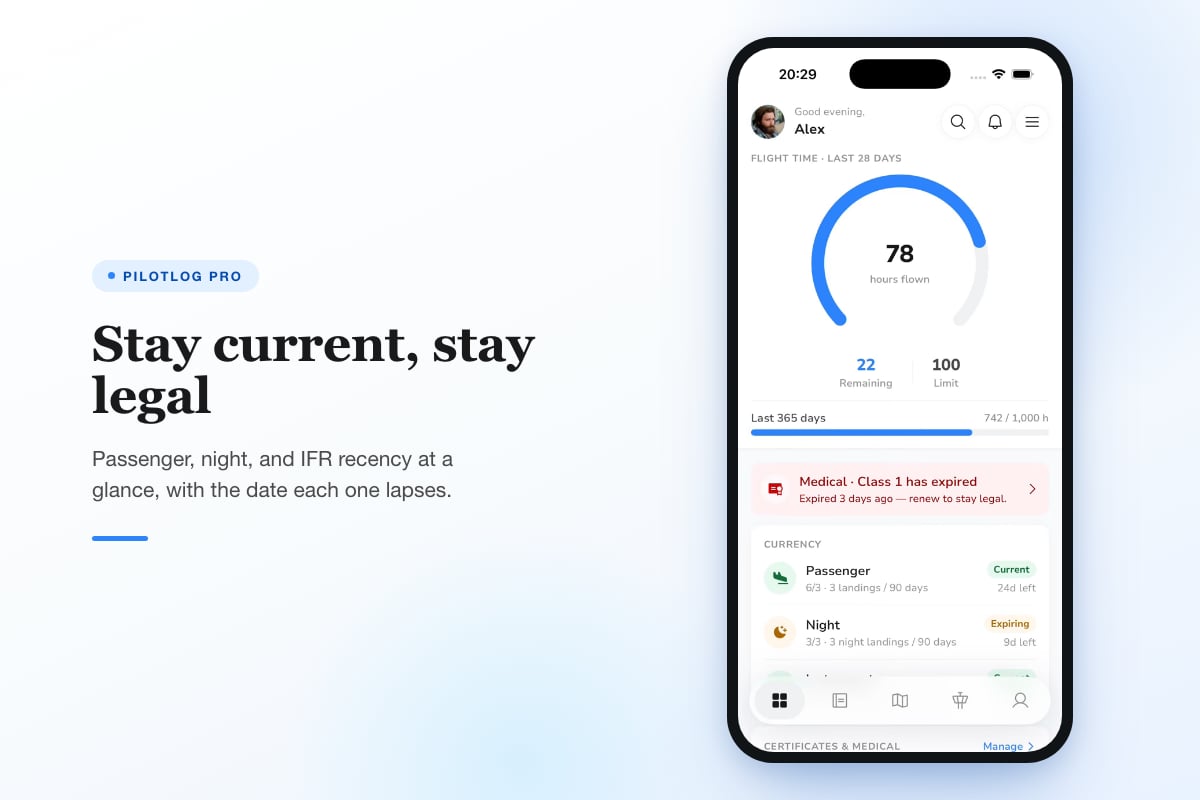
Pilotlog addresses this integration challenge by allowing pilots to log flights quickly from any source, then automatically tracking the cascading effects on currency, duty limits, and career statistics. When you log a flight, the system calculates how it affects your 28-day duty totals, night currency countdown, type rating hours, and dozens of other metrics simultaneously. This comprehensive aviation tracking ensures nothing slips through when operating across varied environments.
Open-Source Intelligence and Data Verification
The proliferation of aviation tracking data raises questions about accuracy and verification. Platforms like SENTINEL demonstrate methodologies for aggregating multiple live feeds, cross-referencing sources, and presenting verified information. For pilots, this principle extends to personal records.
Regulatory authorities expect logbook entries to be accurate and defensible. When an entry shows a night IFR flight logging specific approaches, you should be able to verify that against:
- Filed flight plans showing IFR operation
- Sunset/sunrise times confirming night conditions
- Approach charts documenting the procedures flown
- METAR reports evidencing IMC or VMC conditions
Digital aviation tracking that timestamps entries and captures supporting data provides this verification automatically. If questioned about a specific entry years later, comprehensive records make reconstruction straightforward.
Real-Time Monitoring Beyond Position Reports
While public aviation tracking services excel at showing aircraft positions, pilots need real-time awareness of different metrics. Signal Intelligence platforms demonstrate how integrated tracking extends beyond simple location to encompass broader operational context.
For professional pilots, real-time tracking means knowing:
- Current duty hours versus daily and rolling limits
- Flights remaining to maintain specific currencies
- Days until medical or licence renewal deadlines
- Accumulation toward career milestones or year-end targets
A line pilot might check these metrics as routinely as reviewing the weather forecast. With 78 of 100 allowable hours flown in the past 28 days, accepting an additional trip requires calculation. Having completed two instrument approaches this calendar month with four more needed by month-end to maintain currency shapes scheduling decisions.
Mobile Access to Critical Tracking Data
Aviation careers involve constant movement. Effective tracking systems must be accessible wherever decisions get made: in crew rooms, at home during scheduling calls, or in hotel rooms abroad. Mobile applications that sync across devices ensure currency and compliance data stays current and available.
The difference between checking your logbook status from your phone in 30 seconds versus waiting until you access a computer later might determine whether you accept a trip, request a specific pairing, or schedule additional flying to maintain currency.
Career-Long Aviation Tracking and Data Portability
A professional flying career spans decades and multiple employers. The logbook you start as a student pilot eventually documents 20,000 hours across dozens of aircraft types. This career-long record has value beyond regulatory compliance.
Applications for command upgrades, type ratings, and new positions require detailed flight time breakdowns. Airlines want specific equipment experience, international hours, and precision approach counts. Operators evaluating insurance requirements analyze pilot experience in detail.
Aviation tracking systems that export complete records in standardized formats ensure your data remains accessible and portable. Losing years of flight records due to software obsolescence or company changes can complicate career progression and regulatory compliance.
| Export Format | Use Case | Typical Recipients |
|---|---|---|
| PDF logbook | Human-readable summary | Regulators, employers, insurers |
| Spreadsheet (CSV/Excel) | Analysis and manipulation | Personal records, accountants |
| EASA/FAA format | Regulatory submissions | Aviation authorities |
| JSON/XML | System migration | New logbook platforms |
Maintaining backup copies of your complete flight history in multiple formats protects against data loss and ensures compatibility with future systems.
The Integration of Tracking and Flight Planning
Aviation tracking bridges the gap between past flights and future planning. Understanding where you have been shapes decisions about where you go next. A pilot approaching instrument currency expiration might prioritize IFR flights. Someone building multi-engine hours for a type rating seeks relevant aircraft.
This integration extends to broader career planning. Analyzing your flight data over five years might reveal you log 600 hours annually but only 50 in actual IMC. If your career goal involves heavy IFR operations, this gap suggests seeking different flying opportunities or additional instrument training.
Tracking data also informs personal safety management. Reviewing your flights during high-workload periods might show duty time approaching limits or consecutive days flying with minimal rest. These patterns, visible only through comprehensive tracking, enable proactive fatigue management.
Ensuring Data Quality in Personal Aviation Records
The accuracy of aviation tracking depends entirely on the quality of data entered. Garbage in, garbage out applies to digital logbooks as thoroughly as any other system. Professional pilots develop disciplined data entry habits that ensure their records withstand scrutiny.
Best practices include:
- Log flights immediately after shutdown while details remain fresh
- Verify critical fields like night time, IFR approaches, and landings before saving
- Cross-check against official records when available (company systems, filed plans)
- Review currency calculations periodically to confirm system accuracy
- Maintain supporting documentation for unusual or complex entries
Even with automated tracking, human verification remains essential. Systems can calculate sunset times and determine if a flight qualifies as night, but you flew the sector and know whether approaches were conducted visually or on instruments.

Looking Forward: Emerging Trends in Aviation Tracking
Aviation tracking continues evolving with technology. Space-based ADS-B expands coverage to previously unmonitored regions. Machine learning algorithms predict delays and optimize routes. Blockchain proposals promise immutable logbook records resistant to tampering.
For individual pilots, the trend points toward greater automation and integration. Systems that automatically capture flight data from aircraft, verify it against multiple sources, and calculate all regulatory and career implications reduce administrative burden while improving accuracy.
The challenge lies in maintaining control over your own data while benefiting from technological advancement. Your complete flight history represents intellectual property and professional credentials. Choosing systems that respect data ownership, provide robust export capabilities, and maintain privacy ensures you retain that value regardless of how technology evolves.
Aviation tracking serves pilots at every career stage, from monitoring global air traffic to maintaining personal currency and compliance. The systems that prove most valuable integrate multiple data sources, provide predictive insights, and present information aligned with how pilots actually make decisions. While technology handles the calculations and alerts, your judgment determines how to apply that information toward safe, legal, and effective operations. Pilotlog provides the comprehensive tracking foundation professional pilots need, automatically managing currency countdowns, duty limits, and career statistics while you focus on flying. Whether you log 50 hours annually or 1,000, having accurate, accessible records ensures you stay current, legal, and ready for whatever opportunities arise.
- flight tracking
- pilot currency
- ads-b
- logbook compliance
- ifr currency
A logbook that keeps itself.
Join the waitlist and be first in line when Pilotlog launches.
Free to join, no spam. Unsubscribe any time.